Narrative
How do changes in migration between Mexico and the United States relate to the health challenges that migrants face?
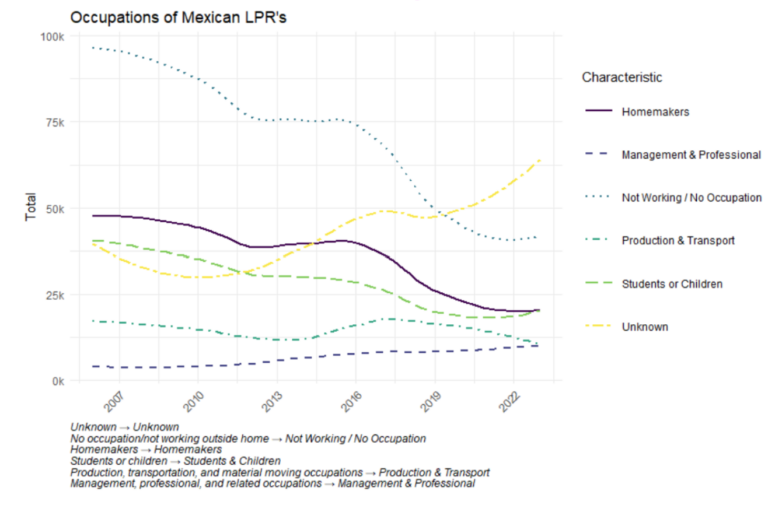
Changes in migration between Mexico and the United States are directly related to health challenges that migrants face such as trauma, stress, and barriers to accessing healthcare. In Chanelle Diaz et al.’s article “Harmful by Design—a Qualitative Study of the Health Impacts of Immigration Detention”, she describes how every participant said how “Their time in detention was characterized by a sense of isolation, overwhelming loss, and emotional pain. Many participants reported developing symptoms of depression and anxiety; some also had thoughts of suicide” (Diaz, et al., 2034). The increase in U.S.-Mexico migration patterns such as an increase in asylum seekers and in migrants who cross the border have led to increased detentions at the border, longer detention stays, and an expanded enforcement of border patrol. The increase in the length of detention directly correlates to trauma and a negative impact to migrant’s overall health due to the poor conditions endured during confinement. In Alana M.W. Lebron et al.’s article “Immigration and Immigrant Policies, Health, and Health Equity in the United States”, she explains how “policies that exclude immigrants from accessing social and health care services can reinforce ideologies that question immigrants’ entitlement to and eligibility for such services and resources, even as new services (such as COVID-19 testing and vaccination) become available” (Lebron et al., 123). Lebron describes how when the government implements policies that block immigrants from getting social services or health care it normalizes racializing immigrants as undeserving to these services and as illegitimate members of the community which further makes it more difficult and perpetuates more barriers for migrants to access healthcare. Policies that deny immigrants healthcare do not only block access, but they strengthen harmful beliefs that migrants are not deserving of help which ultimately impacts how migrants are treated and how comfortable they feel seeking care. The graph “Occupation of Mexican LPRs” shows how the total number of Mexican Legal Permanent Residents (LPRs) have significantly decreased over time in all occupations pictured in the graph. This is due to the decrease in migration due to factors like tougher border enforcement through an increase in border patrol agents and stricter policies which makes it difficult for Mexican migrants to naturalize. Additionally, Mexican migrants face barriers such as language barriers that make it difficult for them to understand how to get naturalized in the first place and lack the time and initiative to do so. In Marissa Raymond-Flesch et al.’s article “Latinx Adolescent Perspectives on the Effects of United States Immigration Policy on Wellbeing”, she discusses how “environmental stressors…can contribute to negative health outcomes including the development of depression, post-traumatic stress disorder, and substance abuse” (Raymond et al., 1618). The instability created by U.S.-Mexico migration policies such as deportation and family separation lead to health challenges for adolescents as stress and trauma can emerge from these strict migration policies and affect the well-being of migrants across generations. The enforcement of migration policies such as stricter border patrol and deportation measures has led to many families being separated and for early and middle adolescents, environmental stressors can lead to immediate and long-term development complications leading to severe mental health issues. In Veronica Vital’s article “The Impact of Immigration Policies on Health Outcomes”, she establishes that “the expanded interpretation of the Public Charge rule and other restrictive measures hinder immigrants— especially Hispanic populations—from seeking timely medical care for chronic conditions such as hypertension and diabetes. This not only leads to delays in diagnosis and treatment but also exacerbates the progression of chronic diseases” (Vital, 137). Vital explains how restricting U.S. immigration policies, particularly those that disproportionately impact immigrant communities, like the Public Charge Rule (which allows officials to deny visas and green cards to individuals they believe are likely to become dependent on government assistance) set barriers to healthcare access for immigrants. Expanded deportation priorities and restrictions on asylum seekers create fear for Mexican migrants and their families which discourages them from enrolling in healthcare programs even when they are eligible because they fear jeopardizing their immigration status. As a result, many migrants face delayed diagnosis and do not get their chronic conditions treated, ultimately worsening their health, and adding to the stress and trauma they already endure.
– Diaz; Fortuna; Lebrón; Raymond-Flesch Sommers, Vital
How do U.S. immigration policies and enforcement practices line up with changes in the number of people migrating between Mexico and the United States over time?
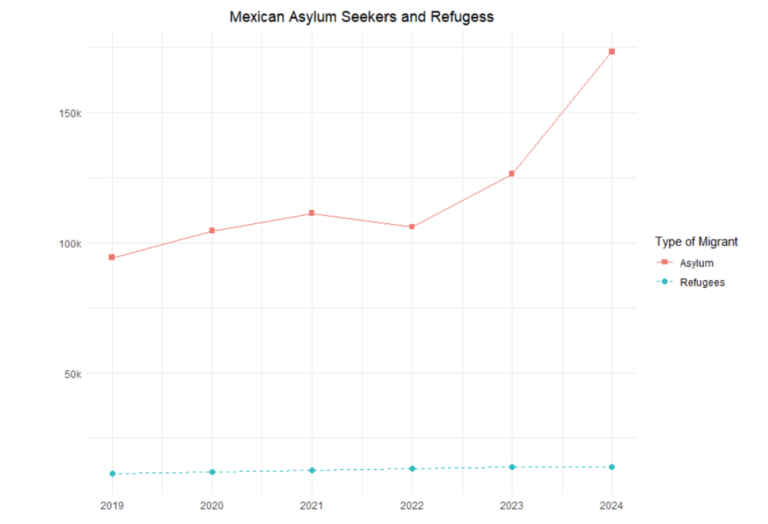
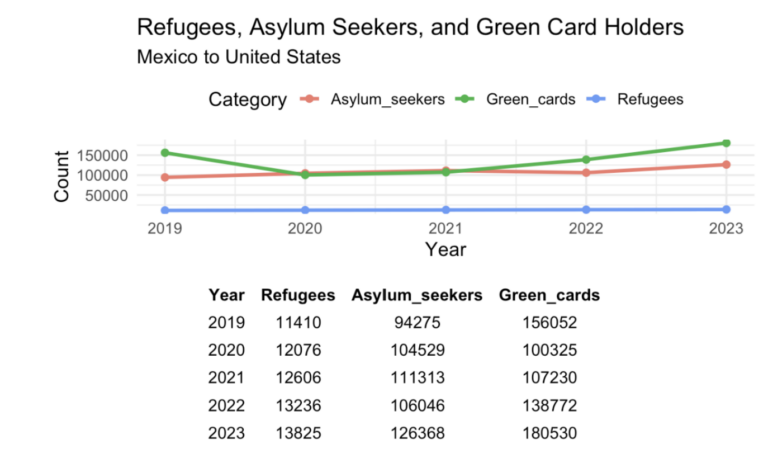
Changes in U.S. immigration policy directly shape the number and types of migrants crossing between Mexico and the United States. Policy shifts often create structural conditions that influence who migrates, under what circumstances they arrive, and how they are processed. The graph “Refugees, Asylum Seekers, and Green Card Holders, 2019 to 2023” shows that asylum seekers and permanent residents from Mexico increased during this period, while refugee admissions remained extremely low. This pattern reflects the limitations of the 1980 Refugee Act, which created narrow categories of persecution that do not fully capture the violence and instability many Mexican migrants face. Douglas Massey and colleagues describe how the asylum system has historically failed to accommodate people fleeing cartel violence, extortion, and community-level insecurity because these forms of harm do not fit the refugee framework that was designed during the Cold War (Massey et al., 2014). Another policy moment that shaped migration patterns is the 1965 Hart Celler Act, which shifted immigration toward family reunification. As Bush, McLarty, and Alden explain, Hart Celler unintentionally laid the foundation for long-term migration from Mexico because it replaced temporary labor routes with family-based admissions (Bush et al., 10). This helps explain why the graph shows steady green card numbers, even during years when asylum claims fluctuate. Policies that emphasize family ties create more stable, long-term migration flows. The graph “Mexican Asylum Seekers and Refugees, 2019 to 2024” further highlights how enforcement practices shape migration. Mexican asylum applications rise sharply over these six years, but the number of refugees admitted remains almost unchanged. This mismatch reflects how policies have not adapted to modern forms of migration. Duncan argues that enforcement-heavy policies create instability for migrants without addressing the underlying causes that push people to leave their home communities (Duncan, 102). When enforcement increases, migrants often turn to asylum as one of the only available legal pathways. Policies like IIRIRA in 1996 and expanded border enforcement after 9/11 intensified deportations and restricted legal protections, which increased fear and uncertainty among Mexican migrants. These laws reshaped migration by making circular, seasonal migration more dangerous. Massey notes that as border enforcement intensified, migrants were more likely to stay in the United States permanently because crossing multiple times became too risky and expensive (Massey et al., 2014). As a result, the migrant population grew even as enforcement increased. Public attitudes shaped by policy also matter. Weitzman et al. show that laws like Proposition 187 helped normalize the idea that immigrants are undeserving of public services, which influenced later federal policies (Weitzman et al., 2021). These restrictive ideologies contributed to a political climate that favors harsh enforcement measures, even when the data shows strong humanitarian need. Taken together, these policies aligned with the trends visible in the graphs. Green cards remain steady because family pathways persist, asylum claims rise because instability in Mexico increases while legal protections remain limited, and refugee admissions stay low because the refugee definition excludes most Mexican cases. Policy decisions therefore shape the migration patterns seen in the data and create the conditions under which migrants must navigate the system.
-Bush et al.; Duncan; Massey et al.; Weitzman et al.
How do migration trends between Mexico and the United States relate to public attitudes and the social experiences of Latino and Mexican immigrants?
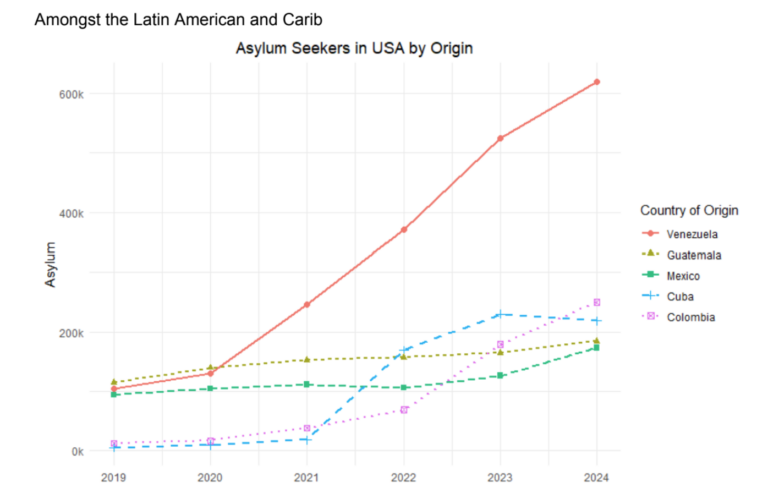
Changes in U.S. immigration policy directly shape the number and types of migrants crossing between Mexico and the United States. Policy shifts often create structural conditions that influence who migrates, under what circumstances they arrive, and how they are processed. The graph “Refugees, Asylum Seekers, and Green Card Holders, 2019 to 2023” shows that asylum seekers and permanent residents from Mexico increased during this period, while refugee admissions remained extremely low. This pattern reflects the limitations of the 1980 Refugee Act, which created narrow categories of persecution that do not fully capture the violence and instability many Mexican migrants face. Douglas Massey and colleagues describe how the asylum system has historically failed to accommodate people fleeing cartel violence, extortion, and community-level insecurity because these forms of harm do not fit the refugee framework that was designed during the Cold War (Massey et al., 2014). Another policy moment that shaped migration patterns is the 1965 Hart Celler Act, which shifted immigration toward family reunification. As Bush, McLarty, and Alden explain, Hart Celler unintentionally laid the foundation for long-term migration from Mexico because it replaced temporary labor routes with family-based admissions (Bush et al., 10). This helps explain why the graph shows steady green card numbers, even during years when asylum claims fluctuate. Policies that emphasize family ties create more stable, long-term migration flows. The graph “Mexican Asylum Seekers and Refugees, 2019 to 2024” further highlights how enforcement practices shape migration. Mexican asylum applications rise sharply over these six years, but the number of refugees admitted remains almost unchanged. This mismatch reflects how policies have not adapted to modern forms of migration. Duncan argues that enforcement-heavy policies create instability for migrants without addressing the underlying causes that push people to leave their home communities (Duncan, 102). When enforcement increases, migrants often turn to asylum as one of the only available legal pathways. Policies like IIRIRA in 1996 and expanded border enforcement after 9/11 intensified deportations and restricted legal protections, which increased fear and uncertainty among Mexican migrants. These laws reshaped migration by making circular, seasonal migration more dangerous. Massey notes that as border enforcement intensified, migrants were more likely to stay in the United States permanently because crossing multiple times became too risky and expensive (Massey et al., 2014). As a result, the migrant population grew even as enforcement increased. Public attitudes shaped by policy also matter. Weitzman et al. show that laws like Proposition 187 helped normalize the idea that immigrants are undeserving of public services, which influenced later federal policies (Weitzman et al., 2021). These restrictive ideologies contributed to a political climate that favors harsh enforcement measures, even when the data shows strong humanitarian need. Taken together, these policies aligned with the trends visible in the graphs. Green cards remain steady because family pathways persist, asylum claims rise because instability in Mexico increases while legal protections remain limited, and refugee admissions stay low because the refugee definition excludes most Mexican cases. Policy decisions therefore shape the migration patterns seen in the data and create the conditions under which migrants must navigate the system.
-Davies; Lee; Stringer; Nakphong et al.; The Eco Imp…
Timeline
Map

This map color codes the number of LPRs (immigrants) that came to America from Latin American and Caribbean countries between the years 2003 to 2023. Compared to all neighboring countries, the largest portion of LPRs are from Mexico, with over 100 thousand on a yearly basis. Although Brazil and Colombia have large populations, the number of LPRs from these Latin countries are lower than those from some countries in the Caribbean, namely Cuba and the Dominican Republic, both of which have approximately 1/5th the population of Colombia. Another observation to note is the gender distribution of LPRs flipped in 2015. Prior to 2015, LPRs were predominantly males, but beginning in 2015, the gender distribution shifted in favor of females.